Dogs are creatures of habit. Unlike humans who can adapt to chaotic schedules with coffee and willpower, dogs thrive when their world is predictable. A consistent daily routine is not merely a convenience for busy owners — it is one of the most powerful tools available for supporting a dog’s physical health, emotional stability, and behavioural wellbeing. The best part? The fundamentals of a good routine apply across all life stages, even as the specifics shift.
Why Routine Matters for Dogs
From an evolutionary perspective, dogs descended from wolves — social animals whose lives were structured around the rhythms of hunting, resting, and social bonding. Domestication has softened many instincts but not the deep-seated need for predictability. A dog that knows when it will be fed, exercised, and given attention is a calmer, more confident dog. Uncertainty triggers the stress response, and chronic low-level stress is linked to a wide range of behavioural issues: excessive barking, destructive chewing, separation anxiety, and even aggression.
Research in animal behaviour consistently shows that dogs with predictable routines display lower cortisol levels, better digestive health, and more stable temperaments. In short, routine is medicine.
Read Also: DIY Pet Projects: Fun and Affordable Ideas for You and Your Companion
The Core Pillars of a Healthy Daily Routine
Regardless of age, every dog’s daily routine should address five core areas: feeding, exercise, mental stimulation, toileting, and rest. The balance between these shifts as a dog ages, but none can be safely ignored.
1. Feeding
Scheduled meals are far superior to free-feeding (leaving food available all day) for most dogs. Fixed meal times allow you to monitor appetite — one of the earliest indicators of illness — and maintain healthy weight. Most adult dogs do well with two meals per day, roughly 8 to 12 hours apart. Puppies typically require three to four smaller meals to support rapid growth and stabilise blood sugar.
Senior dogs may benefit from continued twice-daily feeding, though portion sizes and food composition may need to be adjusted as metabolism slows and joint or organ health becomes a consideration.
2. Exercise
Exercise is non-negotiable, but the type, duration, and intensity must match your dog’s age and breed. Puppies need frequent short bursts of play rather than long structured walks — their growth plates are vulnerable to overuse injury until around 12 to 18 months depending on breed. Adult dogs of active breeds may need one to two hours of vigorous activity daily. Senior dogs still need to move, but gentle leash walks and low-impact swimming may serve them better than hard running.
A useful rule of thumb for puppies: no more than five minutes of exercise per month of age, twice a day. So a four-month-old puppy should get no more than 20 minutes of structured exercise per session.
3. Mental Stimulation
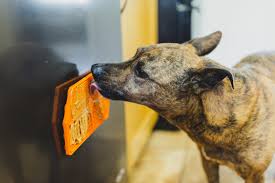
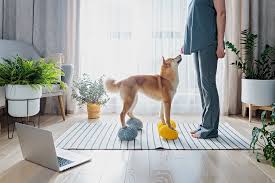
Physical exercise tires a dog’s body; mental stimulation tires its mind. Both are necessary. A dog that receives an hour of running but no mental engagement will still find ways to express its energy — usually through destruction or nuisance behaviour. Enrichment activities — puzzle feeders, scent games, training sessions, chew toys — should be built into every day.
Even just 10 to 15 minutes of nose work (hiding treats for your dog to find) can be more tiring than a 30-minute walk. This is particularly valuable for senior dogs whose bodies can no longer sustain intense exercise.
4. Toileting Opportunities
Dogs need regular, predictable access to toilet areas. Puppies may need to go out every one to two hours, as well as after meals, after naps, and after play. Adult dogs generally manage every four to six hours. Holding urine for extended periods can contribute to urinary tract infections, particularly in females, and creates unnecessary discomfort and anxiety.
5. Rest and Sleep
Dogs sleep far more than humans. Adult dogs sleep between 12 and 14 hours per day; puppies and senior dogs may sleep 16 to 18 hours. Adequate sleep is essential for immune function, memory consolidation, and emotional regulation. Every dog needs a quiet, comfortable, designated sleep space that is consistently available.
Sample Routine by Life Stage
Puppy (8 weeks – 6 months)
- 6:30 AM: Morning toilet trip immediately upon waking
- 7:00 AM: First meal
- 7:30 AM: Short play session (10–15 minutes), then toilet
- 9:00 AM: Morning nap (puppies need frequent sleep)
- 12:00 PM: Second meal, toilet, brief play
- 2:00 PM: Nap
- 4:00 PM: Third meal, short walk or play, training (5 minutes max)
- 6:00 PM: Supervised exploration or chew time
- 8:00 PM: Final meal, toilet trip
- 10:00 PM: Last toilet trip, settle for the night
Adult Dog (1–7 years, varies by breed)
- 7:00 AM: Morning walk (30–60 minutes depending on breed)
- 7:45 AM: Breakfast
- 12:00 PM: Midday toilet break, 10-minute training session or enrichment game
- 5:30 PM: Evening walk (30–60 minutes)
- 6:00 PM: Dinner
- 7:30 PM: Relaxed chew time or puzzle feeder
- 9:30 PM: Final toilet trip
- 10:00 PM: Settle for the night
Senior Dog (7+ years, varies by breed)
- 7:30 AM: Gentle morning walk (20–30 minutes, unhurried pace)
- 8:00 AM: Breakfast (consider joint-supportive supplements if advised by vet)
- 10:00 AM: Sniff walk or gentle garden exploration
- 1:00 PM: Midday rest
- 3:00 PM: Scent-based enrichment activity or gentle play
- 5:30 PM: Short evening walk
- 6:00 PM: Dinner
- 8:00 PM: Calm bonding time (massage, grooming)
- 10:00 PM: Final toilet, settle for the night
Building in Flexibility Without Breaking Routine
Life is unpredictable. Work schedules change, weather intervenes, and emergencies happen. A well-built routine should be consistent enough to provide security but flexible enough to survive the occasional disruption without derailing your dog’s behaviour.
The key is consistency in sequence rather than rigid timing. If your dog knows that walk comes before breakfast, and breakfast is followed by rest, the exact clock time matters less than the predictable order of events. Dogs orient themselves by sequence and environmental cues as much as by time.
“A dog that knows what comes next is a dog that can relax. The nervous system needs predictability to feel safe.” — Dr. Karen Overall, veterinary behaviourist
When Life Changes: Adapting the Routine
Major life changes — a new home, a new baby, a change in the owner’s work schedule — can disrupt a dog’s routine significantly. During transitions, it is worth investing extra effort into maintaining as many routine elements as possible. Even if the timing shifts, preserving the feeding schedule, the type of exercise, and the quiet rest periods can anchor a dog’s sense of security.
If a dog’s behaviour deteriorates during a transition period, it is almost always a communication that the routine has been disrupted. The solution is rarely punishment — it is re-establishing predictability.
The Role of Social Connection in the Daily Routine
Dogs are deeply social animals. Quality time with their human family is not a luxury — it is a core requirement. This does not have to mean hours of structured interaction. A few minutes of calm petting, a brief training game, or simply sitting in the same room all count. Dogs are highly attuned to human attention and can distinguish between active engagement and distracted presence.
Building intentional connection into the daily routine — not just exercise and feeding, but actual focused bonding time — profoundly supports a dog’s emotional health and strengthens the human-animal relationship that underpins everything else.
Conclusion
Building a daily routine for your dog is one of the most impactful investments you can make in their long-term health and happiness. It does not require a perfect schedule or unlimited time — it requires consistency, attentiveness to your dog’s changing needs, and a genuine commitment to meeting those needs every day. A dog with a good routine is not just a well-behaved dog. It is a dog that feels safe, loved, and understood.