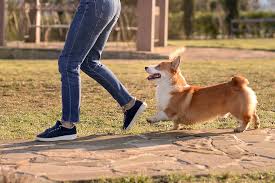
You get up from the couch, and within seconds, your dog or cat is right behind you. You head to the bathroom — they follow. You walk to the kitchen — they appear.
You shift from room to room, and your loyal companion shadows your every step. It might seem amusing at first, but this behaviour is deeply rooted in animal psychology, evolutionary biology, and the unique bond that has developed between humans and domestic animals over thousands of years.
The Evolutionary Roots of Following Behaviour
To understand why your pet follows you, it helps to look back at where domestic animals came from. Dogs were domesticated from wolves somewhere between 15,000 and 40,000 years ago. Early wolves that were less fearful of humans and more willing to hang around human camps gained access to food scraps and protection. Over generations, the animals that bonded most closely with humans thrived.
Following humans — staying close to the source of food, warmth, and safety — became a survival strategy that was literally bred into dogs over millennia. Cats followed a slightly different path. They were drawn to early human agricultural settlements by rodents, and the humans who tolerated or encouraged them benefited from pest control. Over time, cats that were comfortable around humans passed on their genes, creating a lineage of animals somewhat attuned to human presence. While cats are generally more independent than dogs, many still develop strong attachments to their owners and exhibit following behaviour, especially if they were socialised with humans from a young age.
Your Pet Sees You as Their Safe Base
One of the most powerful reasons your pet follows you is that you represent security. In animal behaviour research, the concept of a “secure base” — a term borrowed from human attachment theory — describes how animals use a trusted individual as an anchor when exploring the world. Studies have shown that dogs, in particular, display attachment behaviours very similar to those seen in human infants.
They are more willing to explore a new environment when their owner is present, become distressed when their owner leaves, and seek them out as a source of comfort when frightened. When your pet follows you from room to room, they are not just being clingy — they are staying close to the one individual who makes them feel safe in an otherwise unpredictable world. You are their home base.
Social Bonding and Pack Mentality
Dogs are highly social animals descended from pack-living ancestors. In a wolf pack, individuals move together, hunt together, and rest together. When your dog follows you around the house, they are, in a very real sense, engaging in pack behaviour. You are the leader, and they are staying with the group. This is not just instinct — it is also emotional. Dogs form genuine attachments to their human companions.
Research using brain imaging in dogs has shown that they process familiar human scents in the same reward-related region of the brain that activates when a person sees someone they love. Your dog is not just following you because you might give them food. They are following you because they genuinely enjoy your company. Cats are less pack-oriented, but many cats develop strong individual bonds.
A cat that follows you is expressing trust and affection, which, given the cat’s independent nature, may actually be more meaningful than a dog’s reflexive togetherness.
Attention, Reinforcement, and Habit
There is also a learned component to following behaviour. If your pet has learned that following you leads to good things — a treat, a cuddle, a game, or simply your attention — they will do it more. This is basic operant conditioning. Every time you respond positively to your pet being beside you, you reinforce the behaviour. Over time, it becomes a deeply ingrained habit.
This is worth noting because it means that following behaviour is partly shaped by you. If you have consistently rewarded your pet for sticking close, you have, perhaps without realising it, trained them to do exactly that.
Velcro Dogs and Shadowing Cats: When Is It Too Much?
Some dogs are known in the pet community as “Velcro dogs” — they are almost impossible to separate from their owners. Breeds like Vizslas, Border Collies, and Labrador Retrievers tend to be especially clingy. While this is often endearing, excessive following can sometimes be a sign of anxiety rather than affection. A dog that becomes distressed, destructive, or vocal when you leave the room may be suffering from separation anxiety, which is a genuine psychological condition that benefits from professional guidance.
Similarly, a sudden increase in following behaviour in an older pet — one that was previously more independent — can indicate that the animal is unwell, in pain, or experiencing cognitive decline. When the behaviour represents a change from your pet’s normal pattern, it is worth paying attention to.
Your Pet Might Be Trying to Communicate
Sometimes following is not about attachment at all — it is communication. Your pet may be following you because they need something: food, water, a bathroom break, or play. Many animals have learned that staying close to their human and displaying certain behaviours (whining, pawing, persistent staring) is the most reliable way to get their needs met.
If your pet is following you more than usual, take a moment to check the basics. Is their water bowl full? Have they been fed? Do they need to go outside? In some cases, pets will shadow their owners when they are unwell, as if instinctively seeking comfort or help. Trust your instincts as an owner — you know your pet’s normal behaviour.
The Emotional Meaning Behind the Behaviour
Ultimately, when your pet follows you, it is an expression of one of the most remarkable relationships in the animal world. The bond between humans and domestic animals is unique — built across thousands of years of mutual dependence and, in time, genuine affection. Your dog or cat does not follow you because they have to.
They follow you because, to them, you are the centre of their world. You are the source of food, yes, but also of safety, warmth, play, and love. The next time your pet pads quietly after you down the hallway, consider what they are really saying: I feel safest when I am near you. In a world as complex and confusing as the one our pets navigate, that is no small thing.
Conclusion
Following behaviour in pets is one of the most natural and emotionally rich things they do. It is rooted in evolutionary history, amplified by individual bonding, and shaped by the daily patterns of life with you. Whether your pet is a devoted dog who never leaves your side or a cat who appears nonchalantly wherever you happen to be, the message is the same: you matter to them more than you might realise.