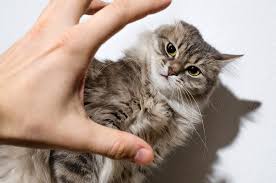
Cats are funny little creatures. One minute they’re rubbing against your legs, purring like they own your soul, and the next minute you try to pick them up and suddenly you’ve committed a crime worthy of judgment, scratching, or a dramatic escape worthy of an Olympic athlete.
If you’ve ever wondered why some cats absolutely hate being picked up, you’re not alone. And the truth is, it’s not random, and it’s not personal either—well, most of the time. It’s actually a mix of instinct, personality, early life experiences, and something very simple: control.
Let’s break it down in a way that actually makes sense without turning it into boring science talk.
First things first: cats are control freaks (in the nicest way possible)
Cats are wired to feel safe when they’re in control of their environment. Unlike dogs, who are often happy to be guided, lifted, carried, and hugged, cats prefer to decide when and how physical interaction happens.
So when you scoop a cat up, even with love in your heart, from the cat’s perspective something very different is happening:
“I was minding my business… and suddenly I am airborne.”
That sudden loss of control can feel threatening. Not because the cat thinks you’re evil, but because being lifted removes their ability to escape, adjust, or respond on their own terms.
For a lot of cats, that alone is enough to trigger resistance.
It’s about instinct, not attitude
Even the most pampered house cat still carries instincts from wild ancestors. In the wild, being lifted off the ground usually means one of three things:
- A predator has grabbed you
- You’re being moved against your will
- You are in danger and can’t react properly
Now imagine your cat’s brain still running a slightly updated version of that software. So when hands come from above, wrap around their body, and lift them up, their instinct can quietly whisper: “this is not safe.”
Some cats override that instinct because they’ve learned to trust humans deeply. Others… not so much.
Early experience matters more than people think
A huge factor is how the cat was handled as a kitten.
Cats that were gently picked up, held briefly, and associated human touch with comfort during their early weeks tend to tolerate it better as adults. They learn: “being held is normal, nothing bad happens.”
But cats that weren’t handled much—or had rough or stressful interactions—often grow up treating lifting as something suspicious or uncomfortable.
And here’s the tricky part: cats don’t just “grow out of it” automatically. If anything, they become more opinionated with age.
So if your cat acts like picking them up is an insult, it might not be drama—it might just be lack of early positive experience.
Some cats simply don’t like the physical sensation
Let’s be honest: not all cats are built the same.
Some cats enjoy cuddling, being cradled, or even carried like a baby. Others feel like being picked up is physically uncomfortable.
Think about it from their perspective:
- Their paws are off the ground
- Their body is being supported in a way they didn’t choose
- They can’t easily adjust posture
- They might feel squeezed, even if you think you’re being gentle
Even slight pressure in the wrong spot can make them uncomfortable. Cats are very sensitive about how their bodies are supported, especially around their belly and back legs.
So sometimes it’s not emotional—it’s just “I don’t like how this feels.”
Personality plays a huge role
Just like people, cats have personality types.
Some are naturally:
- affectionate
- tolerant
- social
- clingy in a cute way
Others are:
- independent
- cautious
- easily overstimulated
- highly sensitive to touch
You can have two cats raised in the same home, same environment, same love—and one will happily sit in your arms while the other acts like you’re trying to launch them into space.
That’s just personality. No deeper mystery.
Trust level changes everything
A cat that fully trusts you may still dislike being picked up—but they’ll tolerate it more calmly.
A cat that is unsure about you or still building trust will usually resist it much more strongly.
And here’s something people often miss: trust isn’t just about feeding or being around the cat. It’s also about predictability.
If picking up a cat always leads to something they don’t like—bath time, being moved somewhere they don’t want to go, or forced cuddling—they’ll start resisting even faster.
In their mind, they’re learning patterns like:
“Being picked up = loss of freedom.”
The “trap feeling” is real for them
When you pick up a cat, especially quickly, they can feel trapped. Even if you have no bad intentions, their brain interprets it as:
- I can’t move freely
- I can’t escape easily
- I didn’t choose this moment
And cats are escape-oriented animals. Their comfort comes from knowing they can leave at any time.
Once that option disappears, discomfort kicks in.
But here’s the interesting part: not all cats hate it forever
Some cats start off hating being picked up and gradually learn to tolerate it. Others never enjoy it but learn to accept short lifts if done gently and predictably.
The difference usually comes down to:
- gentle introduction
- short, positive experiences
- no forcing or holding too long
- respecting when they want down
Cats are not stubborn in the way people think. They’re actually very pattern-based. If something consistently feels safe and non-threatening, they may slowly warm up to it.
So what should you do?
If your cat hates being picked up, the worst thing you can do is force it repeatedly. That usually makes them trust it less over time.
Instead:
- Let them come to you first
- Keep lifting moments short
- Support their whole body properly
- Put them down when they show discomfort
And most importantly, don’t take it personally. A cat rejecting being picked up is not rejecting you. It’s just expressing a preference very clearly… in the only language they really have.
Final thought
Cats aren’t complicated because they’re difficult. They’re complicated because they’re honest. If they like something, they show it. If they don’t, they show that too—very clearly, sometimes dramatically.
So when a cat refuses to be picked up, it’s not rebellion. It’s communication.
And once you start seeing it that way, everything about living with cats starts to make a lot more sense.