Indoor cats live longer, safer lives than cats allowed to roam freely outdoors, but that safety comes with a tradeoff: indoor cats rely entirely on their owners to provide the stimulation, space, and predictability their instincts demand. Without it, even a well-fed, well-loved indoor cat can develop chronic stress, which often shows up as litter box problems, overgrooming, aggression, or unexplained illness. Creating a genuinely low-stress environment means thinking carefully about a cat’s natural needs and designing the home around them.
Understanding What Stresses Cats
Cats are territorial animals with strong instincts around safety, resources, and predictability. Common stress triggers in an indoor environment include sudden changes in routine, conflict with other household cats, insufficient resources like litter boxes or feeding stations, lack of vertical or hiding space, boredom from insufficient mental stimulation, and exposure to outdoor cats or unfamiliar animals visible through windows. Because cats can’t express stress verbally, it often builds quietly until it manifests as a behavioral or even medical issue.
The Resource Rule: One Per Cat, Plus One
Veterinary behaviorists widely recommend the “one per cat, plus one” rule for essential resources, particularly litter boxes, food stations, and water bowls. This means a household with two cats should ideally have three litter boxes, placed in different, easily accessible locations throughout the home rather than clustered together. This spacing reduces resource guarding and competition, which are common, if subtle, sources of stress in multi-cat households, even among cats that otherwise appear to get along.
Litter Box Best Practices
Litter box stress is one of the most common, and most overlooked, sources of chronic anxiety in indoor cats. Boxes should be large enough for the cat to turn around comfortably, roughly one and a half times the length of the cat from nose to tail. They should be placed in quiet, low-traffic locations, never near loud appliances like washing machines, and never positioned in a way that traps the cat in a corner with only one escape route. Daily scooping and regular full litter changes are essential, since cats are highly sensitive to odor and will often avoid a box that’s become too soiled, leading to accidents elsewhere in the home.
Vertical Space and Hiding Spots
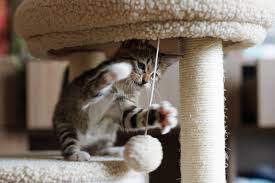
Cats feel safer when they have the option to retreat upward or into an enclosed space. Without these options, a cat confined entirely to floor-level, open spaces can feel chronically exposed and vulnerable. Cat trees, wall-mounted shelves, and window perches give cats valuable vertical territory, while covered beds, cardboard boxes, or even a simple paper bag offer the enclosed hiding spots that allow a stressed cat to feel secure and unseen when needed.
Predictability and Routine
Cats thrive on consistency far more than many owners realize. Feeding at the same times each day, maintaining a consistent play schedule, and avoiding unnecessary rearrangement of furniture or litter box locations all contribute to a stable, low-anxiety environment. When changes are unavoidable, such as a move or new furniture, introducing them gradually rather than all at once helps minimize the stress response.
Managing Multi-Cat Household Dynamics
Tension between cats sharing a household is one of the most significant and persistent sources of chronic stress, and it isn’t always obvious to owners, since cats often avoid overt conflict in favor of subtle avoidance behaviors. Signs of unresolved tension include one cat consistently avoiding certain rooms, blocking access to litter boxes or food, or excessive staring between cats. Addressing this requires ensuring resources are plentiful and spread out, providing multiple escape routes throughout the home, and in persistent cases, consulting a veterinary behaviorist for a structured reintroduction or management plan.
Calming Aids and Tools
Several tools can support a calmer environment alongside good resource management. Synthetic feline pheromone diffusers, designed to mimic the calming facial pheromones cats naturally produce, can help reduce anxiety-related behaviors in some cats, particularly during stressful events like moves or vet visits. Calming supplements containing ingredients such as L-theanine are also available, though these should be discussed with a veterinarian before use, especially for cats with existing health conditions.
Reducing Outdoor-Triggered Stress
Indoor cats can experience significant stress from outdoor cats or animals visible through windows, sometimes leading to a redirected aggression response toward other cats or even owners in the household. If this is a recurring issue, options include using window film to obscure the lower portion of ground-floor windows, relocating favorite perches away from high-traffic outdoor views, or using motion-activated deterrents outside to reduce the presence of outdoor animals near the home.
Signs Your Environment Is Working
A genuinely low-stress environment usually shows itself through a cat’s everyday behavior: consistent litter box use, regular grooming without excessive licking in one area, relaxed body posture with a loose tail and soft eyes, willingness to eat in the presence of other household members, and engaged, curious behavior rather than constant hiding or hypervigilance. These signs suggest your cat feels genuinely secure in their environment rather than simply tolerating it.
Final Thoughts
Creating a low-stress home for an indoor cat isn’t about a single big change, it’s about consistently meeting a cat’s instinctual needs for safety, space, and predictability. By applying the resource rule, providing vertical and hiding options, maintaining consistent routines, and paying attention to the subtle signs of tension in multi-cat households, owners can give their indoor cats an environment that feels secure rather than simply contained, allowing their natural curiosity and confidence to flourish.